

Stocks and Bonds Fall on Inflation Worries
Good morning,
The Dow (-0.8%), NASDAQ (-2.1%), S&P 500 (-1.4%), and EAFE (-0.5%) all finished the week lower. Similarly, bonds also fell as taxable bonds and tax-free municipal bonds dropped 0.1% and 0.6%, respectively. The 10-year Treasury rose 0.04% to finish the week at 4.73%.
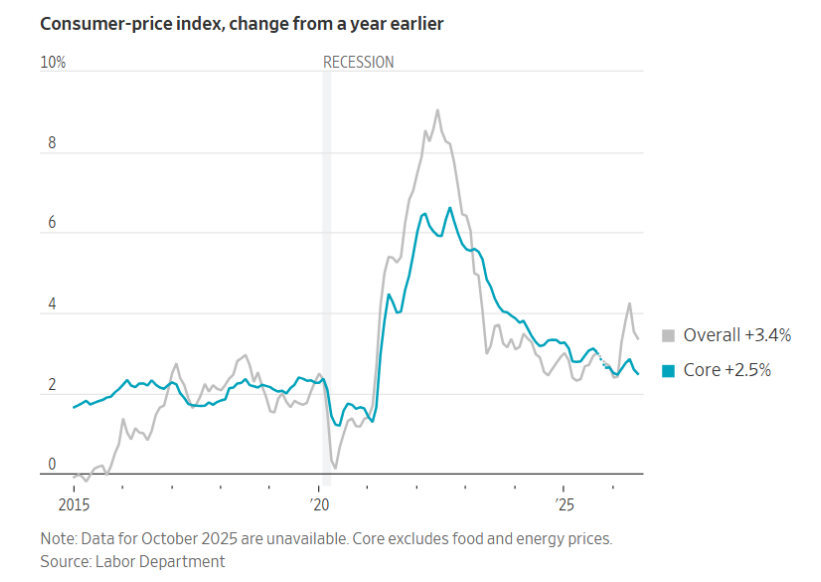
There was very little economic data reported last week as earnings season is nearly over, and the summer is coming to a close. However, the Fed meeting minutes were released, which created greater interest since Kevin Warsh, the new Fed Chairman, doesn’t say very much at his press conferences. Most of the 12 Fed members believe that inflation is too high, but there were differing views as to whether the Fed needs to raise interest rates to bring inflation down. If inflation doesn’t come down soon to the Fed’s target of 2%, it seems inevitable that the Fed will likely need to act. Thus, the release of the Fed-favored inflation gauge, Personal Consumption Expenditures (PCE), this week will likely be viewed with greater scrutiny. See the chart below showing inflation rates over the last 10+ years, with the recent spike being a direct result of increased oil prices.
Bond yields across the entire spectrum have risen recently due to a variety of factors such as inflation, but (finally) investors are beginning to pay greater attention to the mounting government deficit and US debt. The US debt surpassed $40 trillion last week, which can cause serious economic problems in the future. In short, the US debt needs to come down, which can only really be done by lowering government spending and/or raising taxes to eliminate the budget deficit each year. Increased economic activity will certainly help, but it can’t do it alone. It will be interesting to see what policy changes will occur in the coming years to combat the US debt. Rather than ending on that somber note, I must also point out that the US economy remains solid, so let’s hope that serves as a key ingredient to solving this bigger, long-term problem.
Have a great day and terrific week!

Source: Yahoo Finance
Content in this material is for general information only and not intended to provide specific advice or recommendations for any individual. All performance referenced is historical and is no guarantee of future results. All indices are unmanaged and may not be invested into directly.
The economic forecasts set forth in this material may not develop as predicted and there can be no guarantee that strategies promoted will be successful.
The Standard & Poor’s 500 Index (S&P500) is a capitalization-weighted index of 500 stocks designed to measure performance of the broad domestic economy through changes in the aggregate market value of 500 stocks representing all major industries. The NASDAQ Composite Index measures all NASDAQ domestic and non-U.S. based common stocks listed on The NASDAQ Stock Market. The market value, the last sale price multiplied by total shares outstanding, is calculated throughout the trading day, and is related to the total value of the Index. Government bonds and Treasury bills are guaranteed by the US government as to the timely payment of principal and interest and, if held to maturity, offer a fixed rate of return and fixed principal value.

