

Best Self-Directed IRA (SDIRA) Companies in October 2026
Written by: Marc Guberti. CFPC®
Edited by: Amanda Hankel
Reviewed by: Kyle Ryan, CFP®, ChFC®
The best self-directed IRA (SDIRA) companies balance competitive fees with access to alternative investments. But finding the right fit involves more than just investment options. We also looked at customer support, credibility, and any unique features each company offers.
To put this list together, we reviewed dozens of self-directed IRA providers and highlighted those that stood out in multiple areas.
Reviews of the best self-directed IRAs
SDIRAs offer more investing options than regular IRAs, but some SDIRAs are better than others. These are some of the best picks to consider.
iTrustCapital
Best for Crypto Trading
Why it’s one of the best: iTrustCapital offers more than 75 cryptocurrencies and the only fees it charges are transaction fees.
iTrustCapital is one of the most established self-directed IRAs that specializes in crypto trading. The company has been in business since 2018, and the lack of any annual fees is a key reason why. You don’t even have to pay storage fees, which is a common expense for crypto IRAs.While Bitcoin and Ethereum are the two most popular cryptocurrencies, iTrustCapital doesn’t stop there. Customers can trade more than 75 cryptocurrencies in an iTrustCapital self-directed IRA. Solana, Dogecoin, and XRP are some of the additional cryptocurrencies you can trade.No annual feesTrade more than 75 cryptocurrencies24/7 trading for every asset offeredA+ BBB ratingThe 1% crypto transaction fee can add up for frequent tradersFixed fees for gold and silver transactionsLimited selection of precious metals
Asset types
CryptoGoldSilver
Fees
1% per cryptocurrency transaction (buy & sell)$75 over spot per ounce per gold transaction$3.25 over spot per ounce per silver transactioniTrustCapital does not charge any other fees, such as set up, exit, annual, maintenance, storage, withdrawal, or transfer
IRA Financial
Best Variety of Assets
Why it’s one of the best: IRA Financial stands out for its various asset choices, from private equity, private lending, cryptocurrency, precious metals, and more.
There’s no confusion about how much you’ll pay with IRA Financial. The company has a straightforward fee schedule, but that’s not the firm’s only strength. You can choose from a wide range of alternative assets, such as real estate, crypto, and private equity.Some self-directed IRA providers only specialize in a few alternative assets, but IRA Financial allows you to buy and sell almost anything under the sun while enjoying tax benefits.Choose from many alternative assetsNo transaction or asset value feesTransparent fee scheduleGuaranteed IRS audit protectionAnnual tax consulting is includedA+ Better Business Bureau (BBB) ratingHigh annual custodian feeOne-time set-up fees and annual fees vary significantly depending on which retirement account you useLive chat is not available 24/7$500 minimum balance
Asset types
Real estatePrivate equityCryptocurrencyPrivate lendingTax liensPrecious metalsCrowdfundingMineral rightsEquipment leasing
Fees
Annual custodian fee: $495Transaction fees: noneExpedited processing (standard, within 48 hrs): $75/transactionExpedited processing (premium, within 24 hours or less): $200/transactionAccount termination: $250/transactionAnnual account fee over 30 days past due: $35/transactionOutgoing wire fee: $25/transactionReturned item fee: $30/ounce
View IRA Financial’s fee schedule
uDirect IRA
Best for Real Estate Investors
Why it’s one of the best: You can invest in several types of assets via uDirect IRA, but it provides extensive options in real estate, so it’s a top choice if that is what you’re looking to add to your portfolio.
uDirect IRA has a laundry list of permissible alternative assets that you can store in your retirement account. Residential real estate, commercial real estate, raw land, real estate notes, and REITs are some of the alternative assets you can store in your account.The real estate focus makes sense when you consider the founder. Kaaren Hall, founder and CEO of uDirectIRA, has more than 20 years of mortgage banking, real estate, and property management experience.Investors can accumulate a wide range of real estate assets in their accountsProvides IRS account record-keepingLow set-up and annual feesA+ BBB ratingMany small fees that can add up if you aren’t carefulAsset value fee results in a higher cost as your portfolio grows
Asset types
Real estatePrivate equityNotesGoldSilverCryptocurrenciesOil and gas investmentsFactoring investments
Fees
Setup fee: $50Annual fee: $2750.05% monthly storage fee for cryptoasset value fee that ranges from 0.50% – 1.00% (the percentage decreases as your portfolio grows)
The Entrust Group
Best for Educational Resources
Why it’s one of the best: Entrust Group stands out for offering investors several resources to help you make the most of the assets in your portfolio.The Entrust Group lets you invest in various alternative assets through its self-directed IRAs. However, this amount of flexibility won’t do you any good if you don’t know how to make the most of your investments. That’s why The Entrust Group stands out for its educational articles, webinars, and guides. These resources can keep you busy, but if that’s not enough, you can even jump on a free consultation with one of their experts.The company’s fee calculator lets you see how much you’ll pay to open an account and buy assetsLow account setup feeMany educational resources and free consultationsA+ BBB ratingAnnual recordkeeping fees increase as your portfolio growsSome asset classes have an additional purchase asset fee
Asset types
Real estatePrivate equityPrivate lendingPrecious metalsLLCsCryptocurrencies
Fees
$50 account setup feeAnnual recordkeeping fees that range from $199 – $299$95 purchase asset fee for some assets other than real estate, precious metals, and crowdfunding with select companies)$175 transaction fee for each purchase, sale, or exchange of real estate$250 transaction fee of real estate with a non-recourse loanNo transaction fees for precious metals, although depository fees, storage, and shipping may apply0.15% value fee for every dollar over $50,000 (excluding cash)
How does a self-directed IRA work?
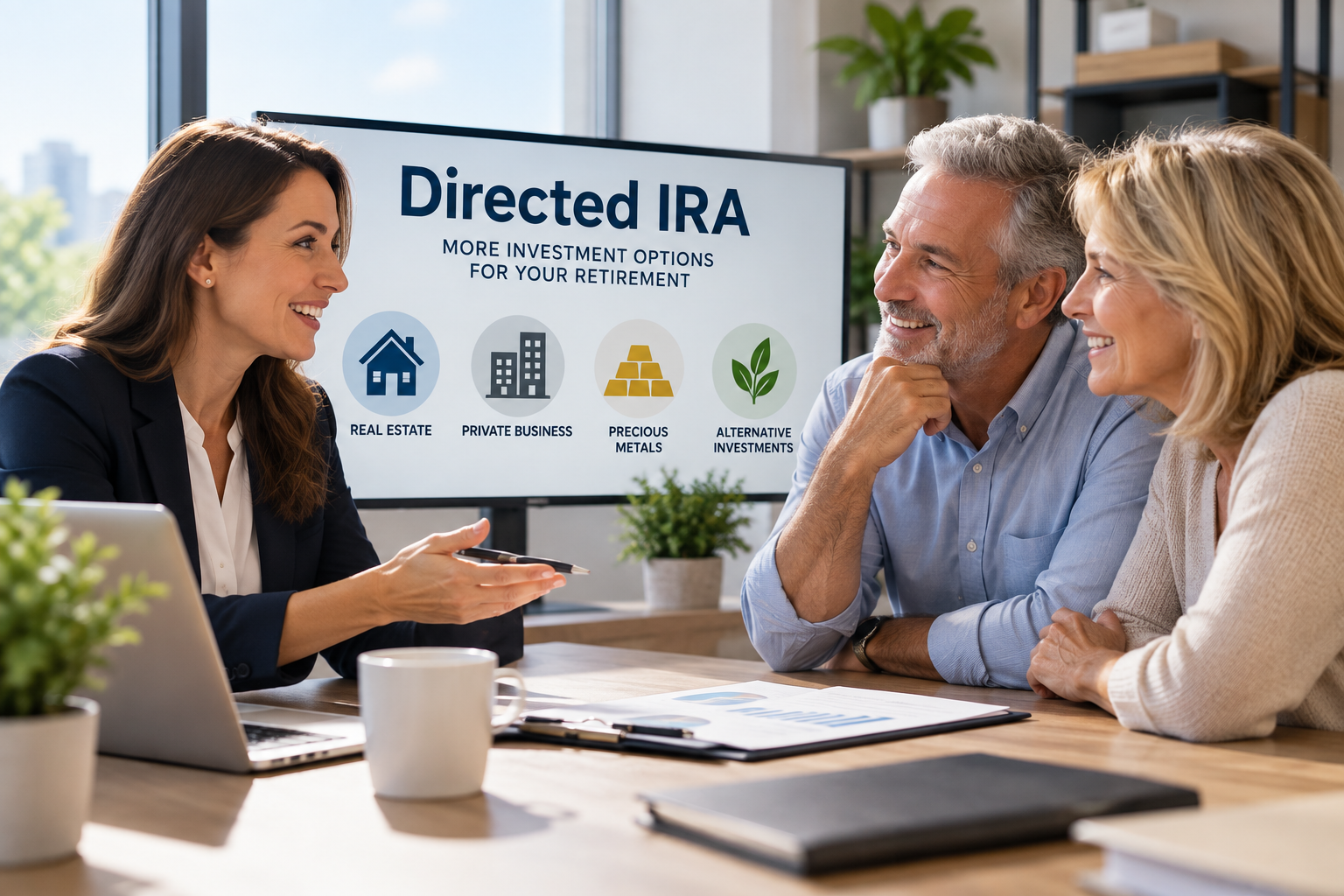
Self-directed IRAs work like regular IRAs, but you are able to invest in more assets. While regular IRAs limit you to stocks, bonds, and funds, it’s possible for you to invest in real estate, precious metals, cryptocurrencies, and other alternative assets with a self-directed IRA.
The only downside is that self-directed IRAs tend to have higher fees, but it may be worth the extra cost if you can generate higher returns with alternative assets.
Get all the details about self-directed IRAs and how they work
"I would consider a SDIRA if you are very heavy in retirement assets, such as a 401(k), which has limited investment options. You can easily find plenty more options within a self-directed IRA. Not only can you use a self-directed IRA for alternative assets such as cryptocurrencies, precious metals, private equity, etc., but one can also purchase individual stocks if you wanted to take that risk." - Kyle Ryan, CFP®, ChFC®
Common alternative assets for self-directed IRAs
A self-directed IRA lets you go beyond stocks and bonds to invest in alternative assets. These options can diversify your portfolio, protect against market swings, and open up new growth opportunities. But they also come with unique risks and responsibilities.
Here are some of the most common choices:
Private equity
Private equity assets involve investing directly in private companies or buying out public companies to take them private. This asset class includes:
- Venture capital, which funds early-stage startups with high growth potential
- Growth equity, which provides capital to more established companies seeking expansion
- Buyouts, where investors acquire controlling stakes in mature companies
- Distressed assets, where capital is invested in struggling companies to restructure and revive them
Private equity investing is likely best for experienced investors with a high risk tolerance and a long-term horizon.
Pros
Potential for high returns and access to early-stage companies or private deals
Cons
Illiquid
Higher risk
Often require larger investment minimums
Precious metals
Precious metals are tangible assets valued for their scarcity, industrial uses, and role as a hedge against inflation or market volatility. This includes:
- Gold, often used as a store of value and safe-haven asset
- Silver, valued for both investment purposes and industrial applications
- Platinum and palladium, used in jewelry, industry, and automotive manufacturing
Investors can hold physical bullion or coins, or gain exposure through exchange-traded funds (ETFs), mining stocks, or futures contracts.
Pros
Viewed as a hedge against inflation
Historically a store of value during economic uncertainty
Cons
Prices can be volatile in the short term
Metals don’t generate income
Cryptocurrency
Cryptocurrency assets are digital tokens that rely on blockchain technology for security, transparency, and decentralized transactions. This includes:
- Bitcoin, the first and most widely recognized cryptocurrency
- Ethereum, which powers smart contracts and decentralized applications
- Stablecoins, designed to maintain a fixed value by being pegged to assets like the U.S. dollar
- Altcoins, such as Solana, Cardano, or Polygon, offering different features and use cases
Investors can buy and hold crypto directly through digital wallets or gain exposure indirectly via crypto ETFs, trusts, or blockchain-focused funds. Crypto investing is often best for risk-tolerant investors who want exposure to digital innovation and can handle sharp price swings.
Pros
High growth potential
Diversification into emerging digital assets
Cons
Extremely volatile
Regulatory uncertainty
Security risks if not stored properly
Real estate
Real estate assets refer to physical properties that hold value and can generate income or appreciate over time. This includes:
- Residential properties like single-family homes, condos, and apartment buildings
- Commercial properties such as office spaces, retail stores, and hotels
- Industrial properties like warehouses and manufacturing facilities
- Land, whether undeveloped, agricultural, or slated for future development
"I would avoid owning real estate in most circumstances in a self-directed IRA. Real estate is one of the more tax-advantageous ways to invest, and owning real estate in an SDIRA is a sure-firee way of paying the IRS more of the income or profits you earn from real estate." - Kyle Ryan, CFP®, ChFC®
If it does make sense for you to place real estate within your SDIRA, you may own these properties directly or gain exposure indirectly through vehicles such as real estate investment trusts (REITs) or real estate funds.
Pros
Can generate rental income and long-term appreciation
Less tied to daily stock market movement
Cons
Requires active management
Potential liquidity challenges
Market downturn riskHigher taxes likely if owned in a SDIRA
"Be very aware of the tax treatment of owning these investments in a self-directed IRA. For example, if you really think cryptocurrency will take off, or that a private equity or precious metal investment would do well, weigh an SDIRA with a Roth IRA or non-qualified investment account, where you may pay less in taxes." - Kyle Ryan, CFP®, ChFC®
How to choose the best self-directed IRA
The five top self-directed IRA picks on this list are just a starting point for discovering the best SDIRA for your financial goals. Before reviewing any self-directed IRA and giving it a serious chance, you should know what you want from one of these retirement accounts.
If you want to trade numerous cryptocurrencies in your self-directed IRA, then a provider like iTrustCapital may make the most sense.
Knowing what you want narrows the playing field, but you will still have to choose from self-directed IRAs that offer all of the basics that you need. You can use the following benchmarks to trim the list even further and determine the winner:
- Fees: Fees are the most decisive category. Every IRA provider has a fee schedule. You can find it on a company’s website or contact customer support and request a copy of their fee schedule. Comparing different fee schedules can help you gauge which self-directed IRA providers are being fair and which ones are ripping off their customers.
- Online reviews: Reading positive and negative reviews on sites like Trustpilot and the BBB lets you gauge the public sentiment of the company. Remember that even the best self-directed IRA providers get negative reviews. However, if the average rating among your top choices is 4.0 stars, and one of the IRA providers has a 1.0 star rating from thousands of reviewers, it’s probably a red flag.
- Educational resources: Webinars, educational articles, and free consultations can give you the confidence to set up a self-directed IRA and know how you want to allocate your capital. The best self-directed IRA providers guide their customers along the journey instead of vanishing once you create an account.
- Customer support: Check when a company’s customer service team is available and which communication methods they provide. Most self-directed IRA providers let you call, email, or live chat with their representatives.
"Asking a SDIRA company whether to invest in an alternative investment is like asking a car salesperson if they think you need a new car. Where should you turn to for advice or help? Yourself! Ask yourself if you have an interest in an investment that not many people are in, with higher risk and lower liquidity than any other investment available to you in your IRA. You may think: “Why take that risk?” The answer is that you typically receive what is called an “illiquid premium,” meaning these assets tend to have a higher expected rate of return because you likely have an illiquid investment for a long time horizon." - Kyle Ryan, CFP®, ChFC®

